Mascoutah Business District Money to Assist Residents Residing in Business District?
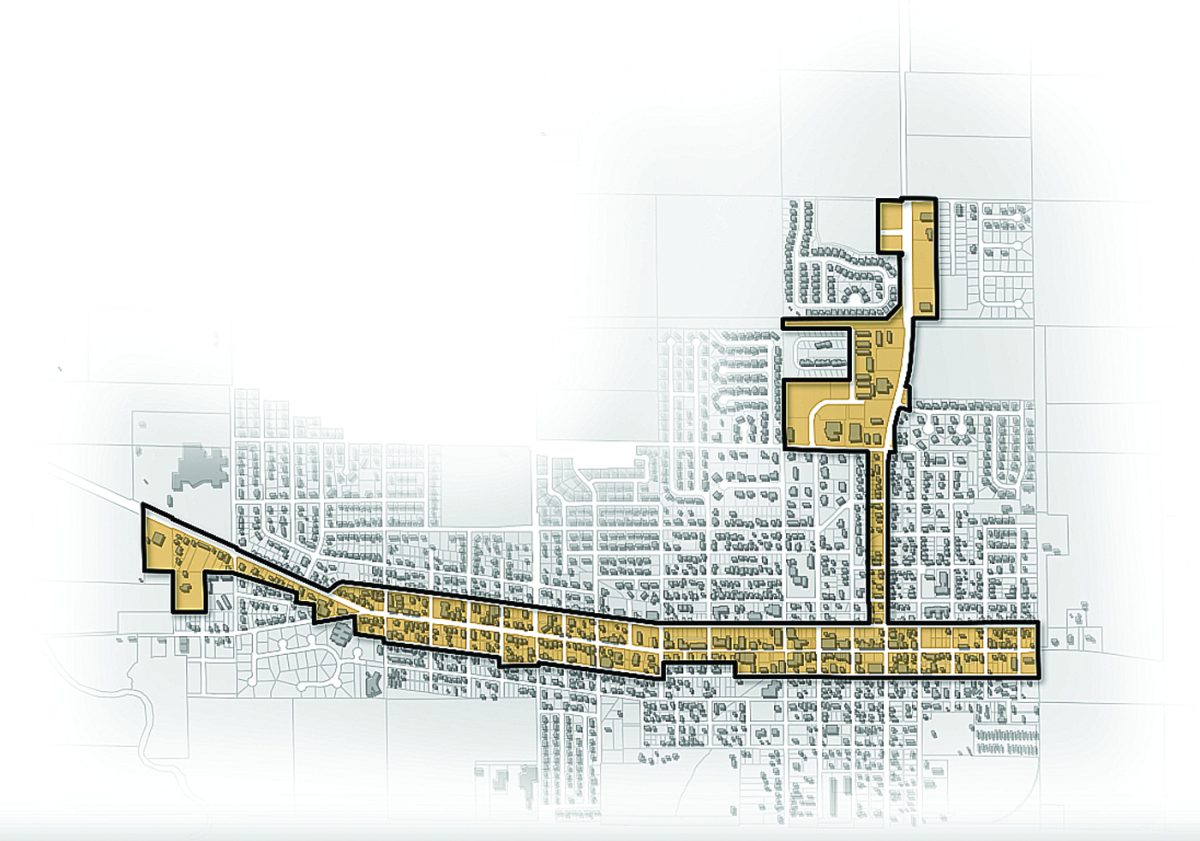
Above is a map of the business district, which is also available on the Mascoutah City Website.
By Zachary Daum
The city of Mascoutah has, since January 1 of this year, implemented a new Business District designed to revitalize Main Street and its surrounding areas. According to City Manager Cody Hawkins, this district aims to attract new businesses and support existing ones through a series of incentives funded by a 1% sales tax within the district.
Unlike the Tax Increment Financing (TIF) districts previously used by Mascoutah, which are funded through property tax abatement, the Business District relies on sales tax revenue. This 1% sales tax, which currently excludes certain items like groceries, is collected by the county and transferred monthly to the city, generating an estimated $300,000 annually.
The Business District covers a significant portion of Main Street, stretching from one end of town to the other and encompassing key commercial areas. The funds collected are earmarked for a variety of improvements, including brick-and-mortar renovations, new roofs, windows, plumbing, electrical work, and more. Unlike TIF funds, which are restricted to ground-level improvements like streets and utilities, the Business District funds offer greater flexibility in how they can be used.
However, the exact parameters of the program are still being decided by the City Council. One significant point of discussion is whether residential properties within the Business District should be eligible for grants. While businesses are the primary generators of the sales tax revenue, residential properties also play a crucial role in the overall appearance and value of the district.
“The Council has to decide what they believe to be equitable,” said Hawkins. “Do they include residential properties in the program to improve the visual appeal and overall value of the district, or do they focus solely on businesses since they are the ones generating the revenue?”
Hawkins acknowledges the arguments on both sides. Businesses might feel they should be the sole beneficiaries since they generate the sales tax, but improving residential properties could enhance the attractiveness and value of the entire district. If the Council decides to include residential properties, the grants for these properties would likely be smaller and more limited in scope compared to those for businesses.
The Council is expected to discuss these parameters in upcoming meetings. Hawkins emphasized the need for clear guidelines, including the size of grants, the percentage of matching funds required from applicants, and the types of improvements eligible for funding. The goal is to create a balanced program that supports business growth while also enhancing the overall appeal of the Main Street area.
For now, businesses interested in applying for grants can look forward to the finalization of these guidelines. As the city works with Moran Economic Development to structure the program, the potential for a revitalized Main Street looks promising.
Residents and business owners can view a map of the Business District to see if their property falls within the designated area. The city anticipates ongoing discussions and decisions in the coming months, aiming for a program that brings out the best in Mascoutah’s commercial and residential landscape.
For more information and updates on the Business District, attend upcoming City Council meetings or visit the city’s official website at https://www.mascoutah.org/development-tools-incentives/pages/special-business-district-sales-tax