Clock Exhibit at Mascoutah Historical Museum Honors Collector and Craft
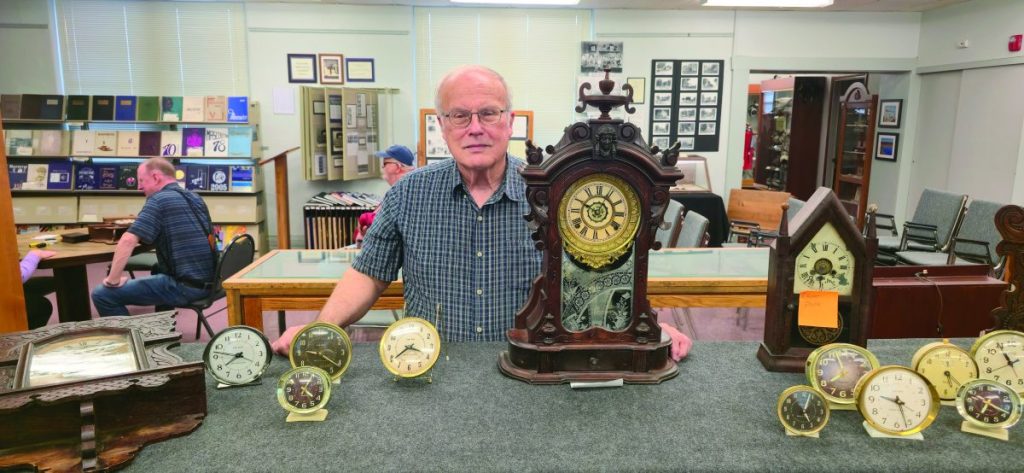
Marty Eisloeffel
By Zachary Daum
[email protected]
A new exhibit at the Mascoutah Heritage Museum is giving visitors a chance to step back in time through the steady tick of antique clocks, many of which once belonged to longtime local collector Roger Grodeon.
The exhibit features dozens of working clocks, most dating to the late 1800s, and highlights both the craftsmanship of the era and Grodeon’s deep passion for collecting and preserving them.
Marty Eisloeffel, a close friend of Grodeon who helped organize the display, said the collection reflects years of shared interest and friendship.
“I miss Roger terribly,” Eisloeffel said. “He was just a very, very sweet man.”
Eisloeffel said Grodeon was known for keeping a large number of clocks running in his home, including several in his bedroom.
“He had seven striking clocks in his bedroom,” Eisloeffel said. “I asked him how he could sleep, and he said he couldn’t sleep without them.”
Most of the clocks in the exhibit are from the 1880s and 1890s and represent the Victorian style, known for detailed and decorative designs.
“These are all high Victorian,” Eisloeffel said. “They’ve got all the fancy details. They look like they’re hand carved, but they were mass produced.”
The exhibit also offers a look into the broader history of clockmaking in the United States. Early clocks were once rare and expensive, but that changed in the early 19th century when Eli Terry introduced mass production methods.
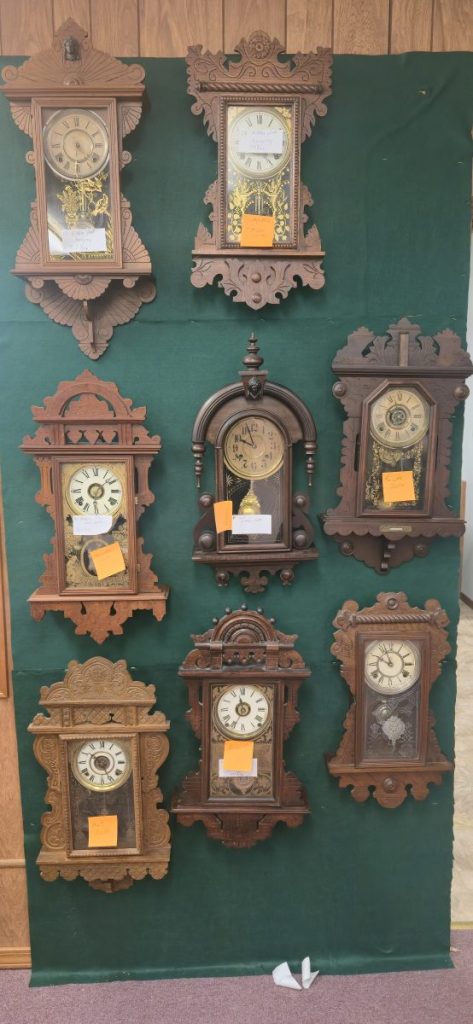
These are many of the clocks that have already been sold
Before that time, clocks were made individually. Terry’s system allowed for interchangeable parts and made clocks more affordable for everyday families.
“Clocks were the first things that were mass produced,” Eisloeffel said. “He made it possible for ordinary people to have one in their home.”
Beyond their function, Eisloeffel said the clocks represent pieces of personal and cultural history.
“They have a life,” he said. “They witnessed family gatherings, weddings, and all kinds of moments. There’s a story behind every one of them.”
Many of the clocks in the exhibit are also available for purchase, with proceeds going toward the museum. Some have already been claimed, but several remain available at relatively low prices.
“Years ago, these would have sold for quite a bit more,” Eisloeffel said. “Now you can get one for around $50 or $75, and it’s running.”
He said buying one of the clocks is a way to preserve history while supporting the museum.
“It’s a good cause,” he said. “And you’re getting something that’s beautiful and still works.”
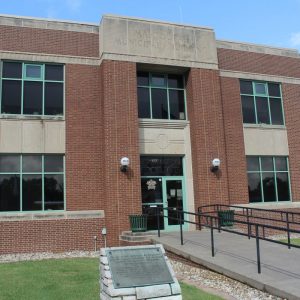
The museum itself is operated by the Mascoutah Historical Society, which was formed in 1976 to collect, preserve and display artifacts from Mascoutah and Engelman Township. The museum building, located along Main Street, was donated to the society in 2003 and now houses a wide range of exhibits, from local memorabilia and schoolroom displays to historical equipment.
In addition to the main museum, the society also maintains other historic properties, including the Berger-Kiel Log House, which is listed on the National Register of Historic Places.
The museum is typically open to the public on the first and third Sundays of each month from 1 to 4 p.m., giving visitors a regular opportunity to explore exhibits like the new clock display. Visitors can also contact the museum directly for more information or to arrange visits. You can also contact the museum by calling them at (618) 566-9774 or via email at [email protected]
You can also find some of these clocks in a smaller exhibit at the Mascoutah Public Library.
Eisloeffel said the museum plays an important role in preserving local history and bringing the community together.
“This museum is a gem,” he said. “If people haven’t been here, they need to come see it.”